

2026-10-22
Indoor playgrounds provide children with opportunities to climb, slide, explore, and play in an exciting environment. For shopping malls, family entertainment centers (FECs), and commercial amusement venues, these facilities can also become valuable attractions for families.
However, operating an indoor playground involves more than installing colorful slides, climbing frames, and soft play structures. Equipment safety, building conditions, staff supervision, and regular maintenance all affect how safely a facility operates.
Understanding indoor playground safety standards is essential for anyone planning, purchasing, or managing commercial playground equipment.
Standards such as ASTM F1918 and the EN 1176 series provide important requirements and guidance for relevant playground equipment. Still, operators must understand which standards apply to their equipment and how those requirements relate to local laws.
This guide explains the major safety standards, common hazards, equipment requirements, inspection procedures, and supplier considerations that every indoor playground operator should know.
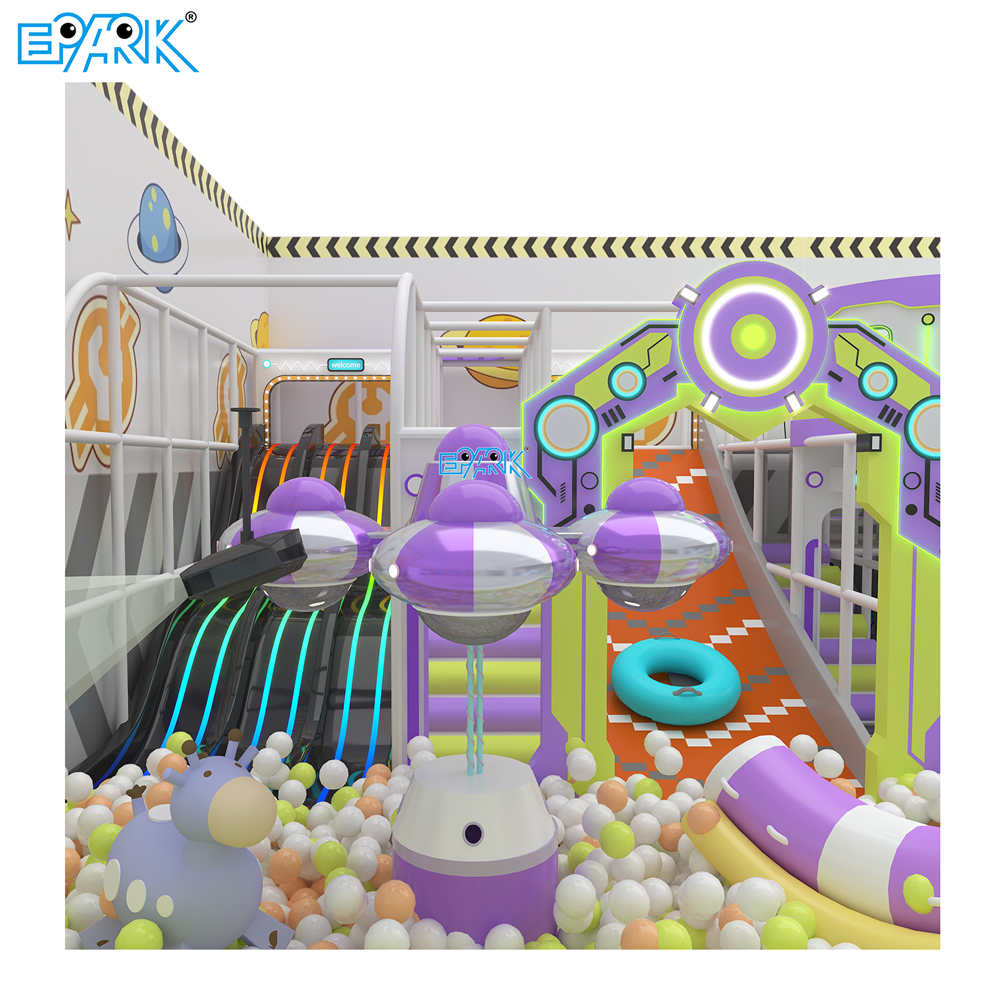
Safety is one of the most important responsibilities of an indoor playground operator.
Children may run, climb, jump, crawl, and interact with playground features in unexpected ways. Even well-designed equipment can develop hazards if it is installed incorrectly or poorly maintained.
Indoor playgrounds may include slides, climbing towers, rope structures, tunnels, ball pools, and interactive equipment.
Potential hazards include:
Falls from elevated platforms
Head, neck, or body entrapment
Collisions between children
Damaged padding or protective barriers
Loose structural connections
Slippery surfaces
Obstructed entrances and exits
Relevant safety standards help manufacturers and operators identify these risks and establish appropriate design and performance requirements.
However, complying with an equipment standard does not eliminate all risks. Supervision, inspection, and maintenance remain essential.
A safety incident can affect more than the injured person.
Operators may face temporary closures, repair costs, insurance claims, legal disputes, and damage to their reputation.
For commercial playgrounds, safety management should therefore be part of daily operations and long-term business planning.
Parents want children to enjoy active play, but they also expect appropriate supervision, clean facilities, and well-maintained equipment.
Clear operating rules, visible staff, and professional maintenance practices can help build trust.
A facility that takes safety seriously is also better positioned to maintain consistent service quality.
Different countries use different playground safety frameworks. The applicable requirements depend on the type of equipment, intended users, and installation location.
Operators should not assume that one standard covers every attraction within a commercial indoor playground.
ASTM F1918-21 is an important U.S. safety performance specification for soft contained play equipment.
It addresses relevant design and performance matters, including:
Materials and manufacturing
Equipment performance
Access and egress
Structural integrity
Maintenance
Fire safety
Evacuation
The standard covers a defined range of children approximately from ages 2 through 12.
It does not cover every type of amusement attraction. Equipment such as amusement rides, sports equipment, and products outside its stated scope may require separate assessments.
Operators can review the official ASTM soft play equipment specification to confirm its intended application.
In European markets, the EN 1176 series provides important safety requirements for playground equipment.
EN 1176-1 establishes general safety requirements and test methods for public playground equipment.
Other parts address particular types of equipment or specific operational matters.
For indoor playground operators, two additional parts are especially useful:
EN 1176-10:2023 provides additional safety requirements for fully enclosed play equipment intended for children up to 14 years old.
EN 1176-7:2020 addresses installation, inspection, maintenance, and operation.
These standards are relevant when planning and managing applicable commercial play systems.
For more information, consult the official EN 1176-10 standard description.
EN 1177 concerns impact attenuation testing for playground surfaces.
The standard is useful when assessing flooring intended to reduce certain fall-related injury risks.
Buyers should request relevant flooring test information and confirm that the tested installation corresponds to the proposed playground design.
A soft-looking floor is not automatically suitable for every potential fall condition.
The U.S. Consumer Product Safety Commission publishes a Public Playground Safety Handbook.
This document provides information about general playground hazards, design, inspection, and maintenance.
However, the handbook explicitly excludes soft contained play equipment from its scope.
It should therefore not be treated as a replacement for ASTM F1918 when evaluating enclosed soft play structures.
Operators can consult the official CPSC playground safety resources for further information.
| Standard | Main Focus | Relevance to Operators |
|---|---|---|
| ASTM F1918-21 | Soft contained play equipment | Design and safety performance of relevant enclosed soft play systems |
| EN 1176-1 | General playground safety | General equipment requirements |
| EN 1176-10:2023 | Fully enclosed play equipment | Additional enclosed-play safety requirements |
| EN 1176-7:2020 | Installation, inspection, maintenance and operation | Operating and maintenance programs |
| EN 1177 | Impact-attenuating surfacing | Assessment of protective playground flooring |
| CPSC Playground Safety Handbook | Public playground guidance | General reference, excluding soft contained play equipment |
Important: These are not interchangeable approvals. Standards may be voluntary or incorporated into legal and contractual requirements depending on the jurisdiction.
Operators must also consider local building codes, fire regulations, accessibility requirements, and licensing conditions.
A practical safety program starts with identifying the hazards that could arise during normal play.
The most important risks should be considered during playground design and monitored throughout operation.
Elevated platforms, climbing structures, and slides can create fall hazards.
Equipment design should consider appropriate barriers, access routes, surfacing, platform arrangements, and intended users.
Operators should inspect elevated structures for loose connections, damaged protective materials, and changes that could affect safe use.
Children may become trapped in openings between barriers, netting, platforms, or other components.
Entrapment risks cannot always be identified through a quick visual inspection.
Design dimensions should be checked against the applicable technical requirements, and any suspected problem should be assessed by a competent professional.
Crowded entrances, narrow passages, and busy slide exits can create collision risks.
Different activities should be arranged so children can move through the playground without unnecessary conflicts.
The operator should also establish appropriate capacity limits based on the actual equipment and facility.
Commercial playground equipment is subject to repeated use.
Over time, fasteners may loosen, padding may become damaged, or netting may develop tears.
Staff should report visible defects immediately.
Equipment with a potentially serious safety defect should be removed from service until the issue has been assessed and corrected.
Adding decorations, new play features, or replacement components without technical review can affect equipment performance.
For example, a decorative panel may obstruct staff visibility or interfere with an access route.
Operators should obtain appropriate approval before making significant modifications.
Materials are important to the overall safety and durability of indoor playground equipment.
Commercial buyers should examine what is used beneath the visible decorative surfaces.
Soft playground equipment frequently uses foam padding around structural elements and play features.
The padding should be suitable for its intended purpose and securely installed.
Operators should regularly check for damaged coverings, exposed hard surfaces, separated seams, and displaced protective materials.
Padding thickness alone does not establish compliance. Material performance and the overall equipment design must also be considered.
The appropriate floor depends on the type of activity and relevant fall hazards.
Possible flooring materials include specialized impact-attenuating mats and other tested surface systems.
When evaluating flooring, ask for:
Material specifications
Relevant impact test reports
Tested thickness and installation conditions
Cleaning and maintenance instructions
Expected wear characteristics
Do not assume that a flooring product tested under one condition will provide the same protection in a different installation.
Indoor playgrounds may contain foam, plastics, fabric coverings, netting, and other combustible materials.
Fire performance must be considered alongside building requirements, evacuation plans, and local fire regulations.
Ask suppliers for relevant material documentation and consult qualified fire-safety professionals where necessary.
A supplier describing a material as flame-retardant does not automatically establish that the complete playground installation satisfies local fire requirements.
Children frequently touch, climb, and sit on playground surfaces.
Materials should be appropriate for regular cleaning and foreseeable commercial use.
Operators should choose cleaning products compatible with equipment coverings and follow the relevant manufacturer instructions.
Children of different ages have different physical abilities and supervision needs.
A facility intended for toddlers should not automatically use the same equipment configuration as a playground designed for older children.
Where appropriate, indoor playgrounds can be divided into age-based activity zones.
Toddler areas may include lower-height climbing features, soft blocks, smaller slides, and simple interactive activities.
Areas for older children may offer more challenging climbing and exploration opportunities.
Actual user age ranges must follow the intended equipment design and applicable requirements.
For more detailed selection guidance, see EPARK's toddler soft play equipment planning guide.
Playground rules should be visible and easy to understand.
Depending on the facility, they may address:
Intended age groups
Adult supervision
Suitable footwear or socks
Food and drink restrictions
Prohibited rough play
Appropriate equipment use
Reporting damaged equipment
Rules should be adapted to the local customer population.
Staff should be able to monitor important play areas.
Avoid unnecessary blind spots and obstacles that prevent supervisors from observing children.
For enclosed multi-level structures, operators should also plan how staff can access different sections during an emergency.
Supervision requirements should be established through a site-specific risk assessment.
Safety should be considered at the earliest stage of indoor playground design.
A visually attractive layout is not sufficient if the facility has unsuitable exits, poor access, or structural limitations.
Before finalizing a playground design, confirm:
Floor dimensions and ceiling height
Structural floor-loading capacity
Locations of columns and walls
Entrances and emergency exits
Ventilation and lighting
Fire protection systems
Electrical supply where required
Delivery and installation access
Building conditions may restrict which play structures can be installed.
Play equipment should not obstruct required exits or emergency circulation paths.
Operators must consider how children, staff, and other occupants can leave the building during an emergency.
The layout should also allow staff to reach children inside enclosed play structures.
Emergency planning should be reviewed with relevant local professionals and authorities.
Capacity should reflect the size and design of the play equipment, available circulation space, supervision arrangements, and local occupancy rules.
A universal children-per-square-meter figure should not be used without evaluating the actual venue.
Accessible entrances, circulation routes, activity opportunities, and relevant controls should be considered during design.
The applicable accessibility requirements depend on the installation location.
For U.S. projects, ASTM F1918 does not replace accessibility obligations under relevant laws and regulations.
For commercial indoor playground projects, EPARK provides equipment configuration assistance, space planning, and 3D design support.
These services can help buyers understand how different play zones and amusement equipment may fit within a proposed venue.
For example, a shopping mall project may need to combine a soft play structure with a toddler area, reception space, and selected arcade equipment.
A preliminary layout can help identify space conflicts before production.
However, manufacturer-generated layouts must still be reviewed against applicable building requirements, technical standards, and local approval procedures.
Even correctly installed playground equipment requires ongoing inspection and maintenance.
Repeated use, cleaning, accidental damage, and normal wear can affect equipment condition.
A written inspection program helps operators identify problems and take corrective action.
Before allowing customers to enter, trained staff should inspect accessible play areas.
Important items include:
Structural components that appear loose or unstable
Damaged padding or exposed hard surfaces
Torn netting and defective barriers
Damaged slides or climbing features
Loose hardware or sharp protrusions
Foreign objects in play areas
Obstructed entrances and exits
Slippery or damaged flooring
Visible cleanliness concerns
Staff should also check that previously reported defects have been addressed before affected equipment is reopened.
Supervisors should monitor playground conditions while children are playing.
High-traffic areas may require more frequent observation.
Staff should watch for developing damage, overcrowding, unsafe behavior, and conditions that require an immediate response.
Daily visual checks are not a replacement for more detailed technical inspections.
Operators should arrange periodic examinations based on the equipment manufacturer's instructions, applicable standards, local rules, and operating conditions.
A competent specialist may be required to assess structural components or other technical features.
Document inspection findings, repairs, equipment closures, and reopening decisions.
Records should identify the responsible person and the date of each action.
| Frequency | Recommended Checks | Responsible Personnel |
|---|---|---|
| Before opening | Visible equipment damage, access routes, cleanliness | Trained staff |
| During operation | Crowding, unsafe use, emerging defects | Playground supervisors |
| After closing | Cleaning, equipment condition, defect reporting | Operations team |
| Periodically | Detailed structural and technical inspection | Competent maintenance personnel |
| After major repairs | Reinspection and reopening authorization | Qualified responsible person |
This is an example management schedule, not a universal regulatory requirement. Actual intervals should follow the relevant technical and legal requirements.
Classify defects according to their potential consequences.
A potentially serious hazard should result in immediate isolation or closure of the affected equipment.
Minor defects should be recorded and corrected within an appropriate timeframe, with access restricted if necessary.
Do not reopen equipment simply because a repair has been attempted. The responsible person should verify that the hazardous condition has been resolved.
Indoor playground safety also depends on how employees manage the venue.
Well-maintained equipment can still be used unsafely if staff lack appropriate procedures.
Frequently touched surfaces should be cleaned on a regular schedule.
Operators should pay attention to handholds, play panels, slides, entrance gates, and other high-contact areas.
Ball pools and complex play components may require specialized cleaning methods.
Use compatible cleaning products and follow instructions for application, contact time, and safe handling.
Employees should understand the playground's operating rules, equipment limitations, and inspection procedures.
Training topics may include:
Recognizing visible hazards
Managing congestion
Responding to unsafe behavior
Reporting damaged equipment
Isolating unsafe play areas
Handling customer incidents
Following evacuation procedures
Training records should be maintained and updated when equipment or operating procedures change.
Operators should establish procedures for injuries, medical emergencies, fire alarms, evacuation, and missing children.
Staff must understand their responsibilities and know how to contact emergency services.
First-aid arrangements should follow applicable local requirements.
Incident records should include the time, location, equipment involved, observed conditions, and action taken.
Near misses should also be reviewed where practical.
Recurring incidents in one area may indicate the need for design changes, maintenance, or improved supervision.
Commercial playground buyers should request relevant technical information before confirming an equipment order.
A general statement that a manufacturer meets international standards is not enough.
Ask for technical drawings, equipment dimensions, intended user age ranges, installation details, and operating limitations.
This information helps the buyer determine whether the proposed system is appropriate for the intended venue.
When a supplier claims compliance with a specific standard, verify:
The exact standard and edition
The equipment or components covered
The testing organization
The test report date and identification
Relevant limitations and exclusions
Whether the tested configuration matches the proposed order
For customized installations, buyers should ask how design changes affect existing test documentation.
The manufacturer should provide suitable instructions for assembly, inspection, operation, and component care.
Installation instructions should identify important structural connections, anchoring requirements, and other safety-related conditions.
| Document | Purpose |
|---|---|
| Approved equipment specifications | Identify the purchased configuration |
| Final layout drawings | Support installation and future inspection |
| Relevant test reports | Document tested requirements and scope |
| Material information | Support safety and maintenance reviews |
| Installation instructions | Support correct assembly |
| Maintenance manual | Guide inspections and repairs |
| Spare parts information | Simplify replacement planning |
| Installation and inspection records | Document opening conditions |
| Staff training records | Support operating procedures |
These documents should be retained and updated when equipment is repaired or modified.
Before opening a new playground, the operator should confirm that installation is complete, required local approvals have been obtained, equipment defects have been addressed, and relevant staff have been trained.
Where required, arrange an independent inspection by a competent professional.
A facility should not open merely because the equipment appears visually complete.
Choosing a suitable manufacturer is an important part of playground safety planning.
Equipment appearance and purchase price should be considered alongside manufacturing capability, technical documentation, customization controls, and after-sales support.
Ask potential suppliers about their production facilities, material specifications, inspection procedures, and experience with comparable commercial projects.
A supplier should be able to explain how important components are checked during production and before shipment.
For larger projects, a factory visit or independent inspection may provide additional assurance.
Before requesting a final quotation, identify the destination country and intended equipment type.
Ask the manufacturer which standards have been considered and what evidence is available.
Avoid relying on broad descriptions such as "fully certified" without reviewing the actual documents.
Customized indoor playgrounds may involve changes to dimensions, themes, play activities, protective structures, and layouts.
Any proposed design changes should be assessed for their effects on structural integrity, maintenance access, visibility, and other relevant safety considerations.
For a deeper supplier evaluation, see EPARK's commercial indoor playground manufacturer guide.
From a supplier and project-planning perspective, three questions deserve particular attention.
First, does the selected equipment match the available space?
A compact shopping mall play area has different requirements from a multi-level family entertainment center. Ceiling restrictions, columns, entrances, and supervision points should be addressed before confirming the equipment package.
Second, does the design match the intended users?
The equipment arrangement should consider children's ages, activity levels, and supervision needs. Toddler zones should not simply be smaller copies of more demanding play structures.
Third, can the operator maintain the equipment after opening?
Buyers should consider access to replacement materials, clear installation documentation, and practical maintenance procedures before purchasing.
These questions help turn a product selection into a more complete operating plan.
Guangzhou EPARK Electronic Technology Co., Ltd. is a commercial amusement equipment manufacturer based in Guangzhou, China.
With more than 13 years of industry experience and manufacturing and showroom facilities covering over 25,000 square meters, EPARK serves arcade operators, family entertainment centers, shopping mall projects, distributors, and other entertainment equipment buyers.
EPARK's product range includes indoor soft playground equipment, kiddie rides, claw machines, redemption games, and other commercial amusement products.
The company supports equipment selection, OEM/ODM customization, venue planning, 3D design, production, installation guidance, and after-sales technical assistance.
For indoor playground buyers, these capabilities can help coordinate equipment purchasing and layout planning.
However, the applicable safety documentation, testing, and regulatory requirements must be verified for each specific project. General company qualifications do not automatically establish compliance for a particular playground structure.
Explore EPARK's commercial amusement equipment range to learn more about available products and project solutions.
The most relevant standards depend on the equipment and location.
ASTM F1918 is important for soft contained play equipment in the United States. In Europe, relevant parts of EN 1176 address playground equipment, including fully enclosed play structures.
Local building, fire, and operating requirements must also be considered.
No. ASTM F1918 is a voluntary consensus standard.
Its applicability may be affected by state or local regulations, contractual requirements, insurance conditions, or other obligations.
It also applies only to equipment within its defined scope.
Relevant parts of EN 1176 may apply to indoor playground equipment.
EN 1176-10:2023 specifically addresses additional requirements for fully enclosed play equipment.
Operators should confirm the applicable parts and their locally adopted editions.
Operators should perform routine inspections and schedule more detailed technical assessments as appropriate.
The actual frequency depends on equipment type, usage, manufacturer instructions, risk assessment, and local requirements.
Daily visual checks do not replace technical inspections.
No. Padding can reduce certain impact risks, but it does not eliminate hazards such as entrapment, collisions, structural defects, or unsafe use.
A complete safety approach includes suitable design, installation, inspection, and supervision.
Important documents may include technical specifications, applicable test reports, material information, installation instructions, maintenance manuals, and inspection records.
The documentation should correspond to the actual equipment being purchased.
A manufacturer can provide technical documentation and evidence of testing within a defined scope.
However, legal compliance also depends on the destination market, installation conditions, and applicable local requirements.
Buyers should verify specific claims and obtain independent assessments where necessary.
Yes. EPARK supports commercial indoor playground customization and project planning.
Available equipment configurations, materials, design requirements, and supporting technical documents should be confirmed during the project consultation process.
Understanding indoor playground safety standards is essential for every commercial playground operator.
Safety begins with selecting suitable equipment and continues through correct installation, effective supervision, routine maintenance, and proper emergency planning.
Standards such as ASTM F1918 and EN 1176 provide important technical frameworks, but they must be applied to the correct equipment types and considered alongside local regulations.
Operators should assess common hazards, request relevant documentation, keep inspection records, and work with qualified professionals when reviewing technical safety matters.
For new indoor playground projects, involving the equipment manufacturer early can help coordinate the playground layout, equipment configuration, production requirements, and installation process.
EPARK provides commercial indoor playground equipment, customized amusement solutions, and project planning support for international buyers.
Whether you are developing a shopping mall kids' zone or a larger family entertainment center, EPARK can help you explore suitable equipment and prepare a project configuration.
Contact EPARK for an indoor playground project consultation to discuss your venue dimensions, target users, equipment requirements, and available technical documentation.


